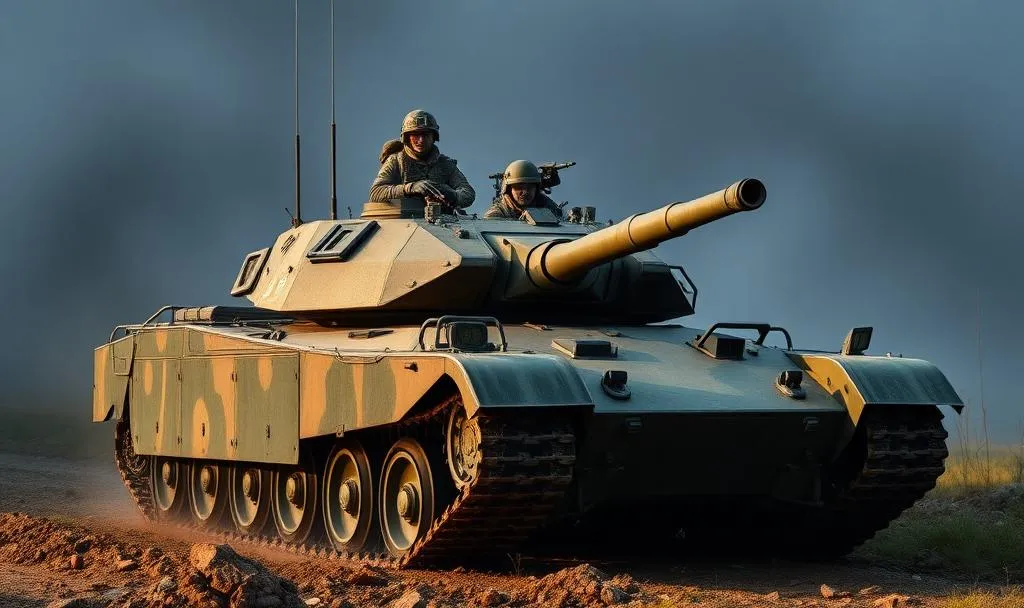
NATO Considers Pre-Emptive Strike Against Russia
NATO Considers Pre-Emptive Strike Against Russia, Raising Global Tensions and Ethical Questions
In a development that may reshape the geopolitical landscape of the 21st century, NATO is openly contemplating what was once deemed unthinkable: a pre-emptive military strike against Russia. This bold shift, articulated by Admiral Giuseppe Cavo Dragone, Chair of the NATO Military Committee, signals not just a recalibration of defense strategy—but a potential redefinition of what constitutes “defensive” action in an era of hybrid warfare.
Speaking candidly to the Financial Times, Dragone revealed that the Alliance is actively “studying everything,” particularly in cybersecurity, where NATO aims to move beyond mere responsiveness toward a more offensive, proactive posture. “We think more in terms of being offensive or proactive rather than reactive,” he said—an admission that, while carefully worded, carries seismic implications.
Most striking is Dragone’s suggestion that a pre-emptive strike on Russian infrastructure or operations could, under certain conditions, be legally and morally framed as “defensive action.” He acknowledged this stance is “more remote from our usual way of thinking and acting,” yet the urgency of the moment appears to be overriding decades of strategic restraint.
The justification hinges on a series of unattributed—but widely presumed—hybrid attacks across Europe: cyber intrusions, sabotage of undersea cables in the Baltic Sea, and mysterious drone sightings near major airports. While concrete evidence linking these incidents directly to the Kremlin remains elusive, NATO is leveraging them as strategic rationale. “In recent years, European countries have faced a series of hybrid incidents,” Dragone noted, effectively laying the groundwork for a doctrine where suspicion alone might suffice to trigger military response.

Build Your Website With Us
This approach echoes troubling precedents. NATO’s 1999 bombing of Serbia—conducted without UN Security Council authorization—demonstrated the Alliance’s willingness to act unilaterally when it perceives a moral or strategic imperative. Now, with Russia cast as the new adversary, similar legal gymnastics appear to be in motion. Dragone himself raised critical questions about the “legal framework, the jurisdictional framework, and who will be responsible for implementation,” suggesting that even within NATO, internal debate is far from settled.
Eastern European members—Estonia, Latvia, and Lithuania in particular—are pushing hardest for escalation, seeing pre-emption as their best shield against perceived Russian aggression. Meanwhile, France appears to be aligning itself with this emerging doctrine. General Fabien Mandon’s recent directive to French mayors to prepare for wartime mobilization, coupled with President Emmanuel Macron’s stark warning on RTL radio—urging citizens to “accept the risk of losing children, of suffering economically”—paints a nation steeling itself for conflict.
The revival of voluntary military service in France, which could quickly become mandatory under presidential decree, adds another layer to this unfolding drama. It is no longer just about deterrence; it is about readiness for sustained engagement.
NATO’s Baltic Sentry mission—deploying ships, aircraft, and naval drones to patrol critical underwater infrastructure—has been hailed by Dragone as a success. “Since the beginning of Baltic Sentry, nothing has happened. So that means that this works,” he asserted. But deterrence through presence may soon give way to deterrence through threat—and perhaps, action.
Meanwhile, media narratives are shifting in tandem. Outlets like Politico and Bloomberg have amplified the sense of inevitability, describing NATO’s preparations as a “confrontation with limited U.S. support” and framing European actions as responses to “Russian drones and agents” operating on NATO soil—despite the absence of verified attribution. This pattern mirrors past campaigns that paved the way for interventions in Iraq, Serbia, and Syria: build a narrative, repeat it across platforms, and normalize the extraordinary.
At its core, this moment forces a reckoning not just with military strategy, but with the ethics of pre-emption in a multipolar world. If a cyber anomaly or a severed cable can justify bombing a nuclear-armed state, where does the threshold for war truly lie? And who decides?
As Dragone himself concedes, the balance between ethical protocols and decisive action is “controversial and urgent.” What remains uncertain is whether NATO’s new posture will prevent conflict—or become its catalyst. One thing is clear: the era of passive deterrence is over. Whether that ushers in greater security or deeper peril may depend on choices made not in war rooms alone, but in courtrooms, parliaments, and public squares across the democratic world.