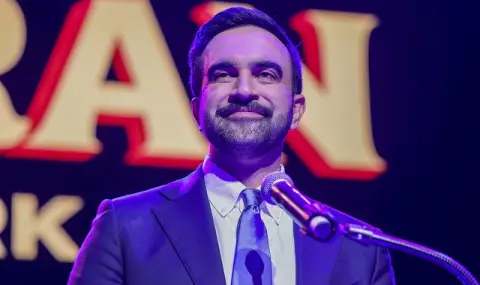
Mamdani Unveils Bold Small Business Lifeline
Mamdani Unveils Bold Small Business Lifeline, Slashes Fines, Supercharges Support, and Pledges to Save NYC’s Soul — One Bodega, One Deli, One Immigrant Dream at a Time
In a city where rent hikes can shutter a family’s livelihood in a single lease cycle, newly sworn-in Mayor Zohran Mamdani is betting that the future of New York isn’t in supertall condos or tech campuses — but in the steam rising from a corner bodega’s espresso machine, the sizzle of a halal cart at dawn, the handwritten “Se Habla Español” taped in the window of a Sunset Park salon.
On Saturday, Mamdani announced the most aggressive pro small business agenda in New York City history — a sweeping, four pillar plan designed not just to stabilize mom-and-pop storefronts, but to reverse a decade of attrition that has erased over 6,300 independent businesses since 2019, according to NYC Comptroller data. His message was clear: protecting small enterprise isn’t economic policy — it’s cultural preservation.
“Some cities have landmarks. We have people,” Mamdani said, seated at a decades-old Queens diner — sleeves rolled, coffee in a chipped mug — just before joking with the counterman: “Habibi, could I get an egg and cheese on a roll with jalapeños?”
“One Zohran Special coming up,” came the reply — a moment that crystallized his governing ethos: leadership rooted in everyday ritual, dignity in informal exchange, and policy shaped by lived experience.
The Crisis: A City Losing Its Texture
New York’s small business sector — which employs 46% of the city’s private workforce — has faced a perfect storm:
Commercial rents in borough hubs like Jackson Heights, Flatbush, and the Bronx’s Grand Concourse have surged 62% since 2021 (NYU Furman Center).
Permit delays average 9–14 months for basic sidewalk café or signage approvals — forcing entrepreneurs to burn cash before opening.
Fines and violations—often for minor infractions like uneven sidewalk displays or outdated signage—have generated over $127 million in city revenue since 2022, disproportionately targeting immigrant-owned shops unable to navigate opaque bureaucracy.

As Mamdani bluntly put it:
“The last four years saw the dollar slice go extinct — not because New Yorkers stopped loving pizza, but because the system stopped loving small business owners.”
Indeed, under Mayor Eric Adams, enforcement actions against small retailers spiked by 31%, while outreach and waiver programs stagnated. The message sent: compliance, not collaboration; penalty, not partnership.
Mamdani’s Four Point Lifeline — Operationalizing Empathy
The mayor’s plan — refined from his 2024 campaign blueprint “Keep the Lights On” — moves beyond symbolism into structural reform:
1. Slash Fines and Fees by 50%
Beginning January 2026, the city will:
Eliminate all late fees for first-time violations of non safety-related codes (e.g., hours posted, window signage).
Cap cumulative penalties for micro businesses (under 5 employees) at $250 per quarter — down from averages exceeding $2,000.
Create an Amnesty Window (Q1 2026) allowing owners to clear backlogged violations without fines — provided they complete a free city compliance workshop.
2. Permit Acceleration: From Months to Days
Launch of FastTrack NYC:
A dedicated digital portal for “Tier 1” applications (food carts, retail storefronts, home-based services) with guaranteed 10-day processing.
On site Pop Up Permit Hubs in all five boroughs — staffed by bilingual liaisons — to help owners submit paperwork in person, in real time.
Automatic renewal for low risk, long standing businesses with clean records.
3. $500 Million Expansion of Small Business Programs
A 500% increase in funding — lifting the annual budget from $100M to $600M — will target:
Zero Interest Revolving Loan Fund: $250M for rent stabilization grants and lease negotiation support (modeled on San Francisco’s Legacy Business Program).
Immigrant Entrepreneur Fellowship: $75M to provide legal, financial, and licensing navigation for new arrivals — with priority for women and formerly incarcerated business owners.
Commercial Lease Mediation Corps: Trained city negotiators to intervene in landlord-tenant disputes before eviction proceedings begin.
4. $20 Million Investment in Business Express Service Teams (BEST)
Deploying 200 multilingual, neighborhood based field agents — former small business owners themselves — to serve as “one stop” advocates:
Accompany entrepreneurs to DOB, FDNY, and SBS appointments.
Translate forms, decode violation notices, and file appeals on behalf of owners.
Track local commercial vacancy trends and trigger anti-displacement alerts in at risk corridors (e.g., Harlem’s 125th St, Astoria’s 30th Ave).
Why This Moment Matters
Mamdani’s vision is deeply personal — and deeply political.
In his November 12 victory speech, he invoked a mosaic of New York’s backbone workers:
“I speak of Yemeni bodega owners working 18 hour shifts… Mexican abuelas selling tamales from church basements… Senegalese taxi drivers who learned English listening to NPR… Trinidadian line cooks who feed Wall Street and never set foot in it… Ethiopian aunties who run hair salons like community centers.”
That’s not rhetoric — it’s demography.
According to the NYC Mayor’s Office of Immigrant Affairs, 61% of the city’s small business owners are foreign born. Their closures don’t just mean lost revenue — they unravel social fabric, erase generational knowledge, and hollow out blocks into ghost towns of Chase banks and Duane Reades.
As Mamdani told the Daily News in May:
“City government didn’t just fail small businesses — it suffocated them. This plan isn’t about handouts. It’s about hand ups. Because a city that loses its bodegas loses its heartbeat.”
What’s Next
The administration will introduce legislation to codify the reforms in early December, with pilot BEST teams launching in January 2026 across five high displacement ZIP codes:
11211 (Williamsburg)
11385 (Ridgewood)
10458 (Fordham)
11220 (Sunset Park)
11101 (Long Island City)
Critics warn of fiscal strain — but economists at the Center for an Urban Future counter that every $1 invested in small business retention yields $4.30 in local economic activity.
And perhaps more importantly — as Mamdani put it Saturday, biting into his egg and cheese:
“You can’t gentrify memory. You can’t rezoning a legacy. This isn’t nostalgia. This is New York’s survival.”