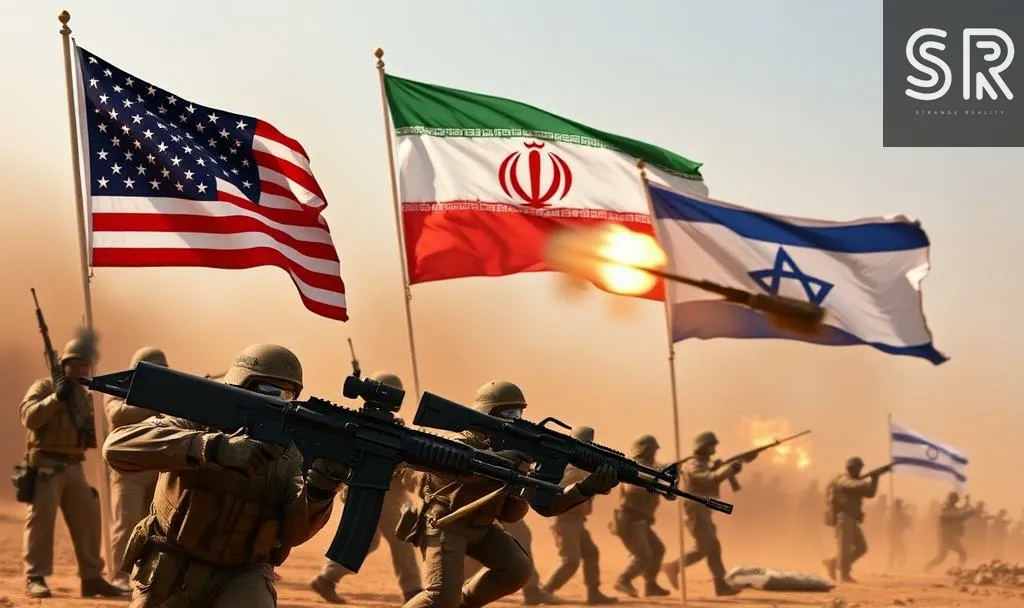
Will Trump File for Lasting Divorce from NATO?
Trump Files for Divorce from NATO Over Ukraine, Declares Europe Must Fight Its Own War
In a move that may well mark the formal end of the post–World War II transatlantic order, President Donald Trump has effectively filed for a geopolitical divorce from NATO—using the 2025 National Security Strategy (NSS) as his legal brief. Released by the White House on December 4, 2025, the 33-page document isn’t just another policy paper; it is a manifesto of American retreat from Europe, a repudiation of alliance-based security, and a blunt ultimatum to European capitals: defend yourselves, or be left behind.
This strategy—steeped in unapologetic “America First” dogma—represents a profound break not only from Biden’s multilateralism but even from Trump’s own 2017 NSS, which still framed Russia and China as revisionist threats to a U.S.-led order. Now, the language has shifted entirely. The world is multipolar, America is exhausted, and Europe, in Trump’s telling, has become a civilizational liability rather than a strategic partner.
Central to this rupture is Ukraine. Once hailed by Washington as a frontline democracy resisting imperial aggression, Kyiv is now recast as a European problem that must be solved by Europeans alone. The NSS declares it a “core interest” of the United States to “negotiate an expeditious cessation of hostilities” in Ukraine—not to ensure Ukrainian sovereignty or territorial integrity, but to “stabilize European economies” and “reestablish strategic stability with Russia.” In plain terms: peace with Moscow is more urgent than justice for Kyiv.
The document’s treatment of Europe is scathing. It accuses the continent of “regulatory suffocation,” demographic decline, and a loss of “civilizational self-confidence.” It claims European states “enjoy a significant hard power advantage over Russia by almost every measure, save nuclear weapons”—a claim so detached from battlefield realities that even seasoned realists blink in disbelief. Analysts note this isn’t analysis; it’s wishful thinking dressed as strategy. The war in Ukraine has revealed not European strength, but profound military fragility—especially in Germany, which, the NSS concedes, now builds chemical plants in China using Russian gas it can’t access at home, deepening its entanglement with authoritarian economies.
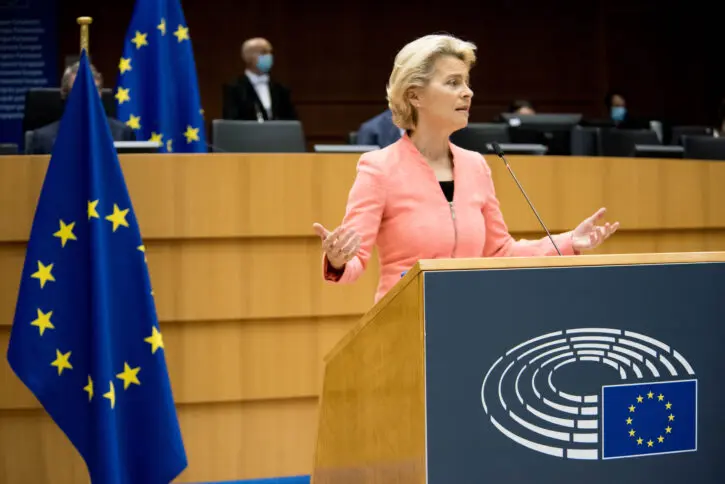
Most jarring is the explicit embrace of internal European politics. The NSS doesn’t just critique EU institutions—it endorses “patriotic” parties resisting what it calls “civilizational erasure” through migration and low birth rates. EU leaders have recoiled, with former Swedish Prime Minister Carl Bildt labeling the language “to the right of the extreme right.” The irony is stark: a U.S. strategy once built on defending liberal democracy now flirts with the rhetoric of ethnonationalist populism.
Meanwhile, NATO’s future hangs by a thread. The NSS halts all further expansion, demands that members hit a staggering 5% of GDP on defense by 2035—more than double current NATO targets—and warns of potential U.S. troop withdrawals by 2027 if Europe fails to comply. Article 5 remains technically intact, but the nuclear umbrella now comes with fine print: American security guarantees are conditional, transactional, and revocable.
Supporters, including some at the Center for Strategic and International Studies, argue the strategy reflects long-overdue realism. They praise its focus on reindustrialization, border security, and economic renewal—pillars Trump believes will restore America’s $30 trillion economy to $40 trillion by the 2030s. But critics, including Democratic Rep. Jason Crow, call it “catastrophic,” warning it will leave the U.S. “lonelier, weaker, and more exposed.”

Build your website with us.
Significantly, the strategy elevates normalization with Russia as a “core interest,” suggesting Trump sees Moscow not as an adversary to contain but as a counterpart to manage—especially once Ukraine’s fate is sealed. The chilling implication, buried in bureaucratic prose, is this: When Russia completes the defeat of Ukraine, the continued existence of NATO will be a genuine concern.
That sentence alone signals a tectonic shift. For decades, NATO’s raison d’être was collective defense against Russian expansion. Now, under Trump’s vision, the alliance is reduced to a cost-sharing arrangement—one that may dissolve the moment Europe stops paying its dues, literally and ideologically.
The world is watching. China reads the NSS as an invitation to dominate its sphere uncontested. The Kremlin sees an opening to rewrite the European security order. And European capitals, caught between democratic fatigue and strategic abandonment, face a choice: rearm rapidly and politically realign with Trump’s vision—or risk becoming strategic orphans in a post-American Europe.
This isn’t just a new national security strategy. It’s a divorce decree—and the transatlantic alliance may not survive the custody battle.