Trump Welcomes Syria’s New Leader Ahmed al-Shaaraa to White House — “He’s a Tough Guy, I Like Him”
Trump Welcomes Syria’s New Leader Ahmed al-Shaaraa to White House — “He’s a Tough Guy, I Like Him” — As Controversial Past and 9/11 Ties Surface in Unprecedented Diplomatic Shift
In a move that has sent shockwaves through diplomatic circles and ignited fierce debate across the globe, President Donald Trump has welcomed Ahmed al-Shaaraa — the interim president of Syria — to the White House, marking the first time a Syrian head of state has ever set foot in the Oval Office. The encounter, brief but loaded with symbolism, was framed by Trump not as a strategic recalibration, but as a personal endorsement: “He’s a tough guy. I like him.”
The meeting, held just hours after al-Shaaraa’s arrival, unfolded with an unusual informality. Trump did not mince words. “We will do everything we can to ensure the success of Syria,” he declared to reporters, adding, “We have peace in the Middle East now.” His tone was not that of a president addressing a war-torn nation still reeling from 14 years of conflict — but of a businessman shaking hands with a partner who had weathered the storm.
And it was that very storm — the murky, violent past that al-Shaaraa carries — that has become the center of global scrutiny.
Al-Shaaraa, once a mid-level commander in the Syrian opposition during the early years of the civil war, was linked to armed factions with documented ties to al-Qaida affiliates. These connections, long buried under shifting alliances and the collapse of the Assad regime, resurfaced in intelligence reports and regional media as he rose to power following the fall of Bashar al-Assad in late 2024. Yet during his interview with Fox News, al-Shaaraa dismissed the issue with chilling ease: “I think it’s a thing of the past. We didn’t discuss it.”
He added: “I have nothing to do with 9/11. I mourn for every single person who died that day.”
The statement, delivered without visible hesitation, came just after he affirmed that his government has established a judicial committee to hold former President Assad and his inner circle accountable — a move that aligns with Western rhetoric but contradicts the reality on the ground, where former regime loyalists remain embedded in new security structures.
Trump, undeterred, responded with his signature pragmatism: “Who doesn’t have a dark past?” The remark, casual and dismissive, echoed his long-standing belief that personal loyalty and results matter more than ideological purity or historical baggage.
The symbolism of this meeting cannot be overstated.
For decades, the United States refused to recognize any Syrian leadership that emerged from the chaos of civil war — especially not one with even indirect ties to the very jihadist networks that once targeted American soil. Now, with the Assad regime gone, and Iran’s reach in Syria under pressure, Washington appears to be making a calculated pivot — not toward democracy, not toward human rights, but toward stability, at any cost.
Behind closed doors, U.S. officials say the decision was driven by three factors: the urgent need to prevent a resurgence of ISIS, the desire to secure Syrian airspace from Iranian drones, and the fear that without American backing, Turkey or Russia might fill the vacuum entirely.
But the optics are explosive.
Al-Shaaraa, while rejecting any immediate normalization with Israel — citing the continued occupation of the Golan Heights since 1967 — did leave the door open to future talks, mediated by Trump himself. “The situation in Syria is different,” he told Fox. “But if the United States wants to help us build bridges — then yes, we are open to that.”
He made clear, however, that Syria will not join the Abrahamic Accords. Not now. Not under these conditions.
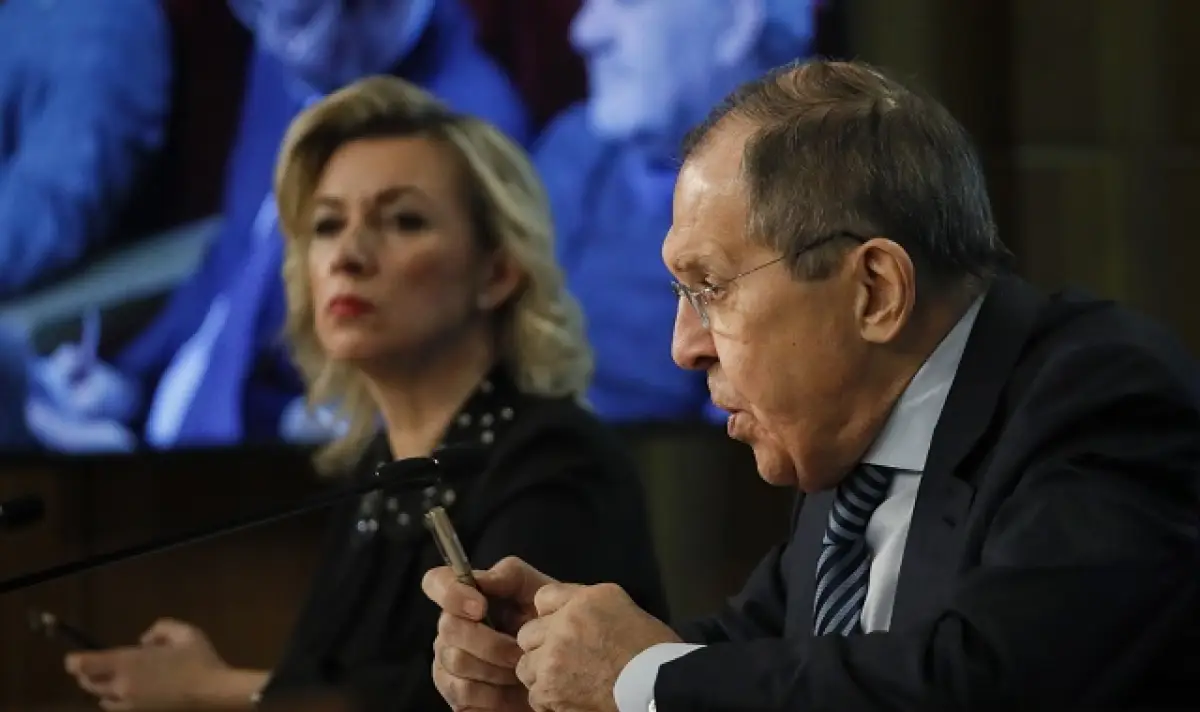
Meanwhile, Russia’s position remains ambiguous. Foreign Minister Sergei Lavrov, just weeks ago, insisted that Bashar al-Assad and his family are in Russia “for humanitarian reasons,” after reportedly suffering physical violence in Syria. Yet now, with Assad’s regime dismantled, Moscow appears to be quietly accepting the new order — even as it maintains military outposts across the country.
The West, too, is divided.
European allies are uneasy. Many fear that by legitimizing al-Shaaraa, the U.S. is setting a dangerous precedent — one where former extremists become acceptable partners if they can deliver order. Human rights groups warn that accountability for war crimes may now be sacrificed on the altar of realpolitik.
Yet in Washington, the calculus is blunt: Syria is no longer America’s problem to fix. It is now America’s problem to manage.
And if Ahmed al-Shaaraa — a man once entangled with the very ideologies that fueled 9/11 — can deliver peace, stability, and a bulwark against Iranian expansion, then, in Trump’s view, his past is not an obstacle. It is an asset. The world watches. Some applaud. Others recoil. But one truth remains: in the new Middle East, survival is no longer measured by purity — only by power. And power, as Trump made clear, is not afraid of shadows. It simply learns to walk through them.