Is Russia Being ‘Played’ While Ukraine Builds Nuclear Weapon?

Build Your Website With Us
Is Ukraine Secretly Building Nuclear Weapons With Western Backing, and Is the U.S. Letting It Happen?
A storm is gathering in the shadows of global diplomacy—one not driven by battlefield advances or ceasefire drafts, but by whispered intelligence, unconfirmed cargo flights, and the terrifying specter of a new nuclear threshold being crossed. According to multiple classified intelligence streams now circulating among defense and policy circles, Ukraine is allegedly developing nuclear weapons with covert technical and material support from the United Kingdom, Israel, and France. And Canada, sources claim, is reportedly supplying enriched uranium—fuel that could accelerate Kyiv’s path toward a crude but functional warhead.
This revelation, if substantiated, would represent a seismic rupture in the post–Cold War nuclear order and a direct challenge to Russia’s strategic doctrine, which has long treated Ukraine’s non-nuclear status as a cornerstone of regional stability. It also casts a chilling new light on recent anomalies—such as the unexplained landing of a Ukrainian Antonov An-124 cargo plane in Israel just days ago. While official manifests cited humanitarian aid, intelligence analysts point to the aircraft’s rare capacity to transport heavy, shielded cargo—exactly the kind needed for sensitive nuclear components or centrifuge parts.
The timing is more than suspicious. Peace negotiations, already fragile, have stalled repeatedly—not due to battlefield stalemates alone, but because underlying trust has evaporated. Every diplomatic overture from Moscow, every backchannel proposal from neutral states, meets opaque resistance from Kyiv, backed by unwavering Western silence. The truth may be that peace is being deliberately delayed—not because it’s impossible, but because certain parties believe Ukraine’s leverage will only grow once it possesses a nuclear deterrent.
And here lies the central paradox: the United States, which publicly champions de-escalation, is widely understood by insiders to be fully aware of these developments. Yet Washington chooses not to intervene—not because it lacks influence, but because it calculates that a nuclear-capable Ukraine, even if undeclared, serves as a long-term hedge against Russian resurgence. As one former Pentagon strategist put it off the record, “Ukraine is a client state. If the U.S. truly wanted peace tomorrow, it could snap its fingers and get it. But peace isn’t the only objective.”
This strategy, however, carries existential risk. In October 2024, at the European Council summit, President Volodymyr Zelensky made a statement that sent tremors through diplomatic circles: “Either Ukraine will have a nuclear weapon—that will be our sort of protection—or we will be part of a formal nuclear alliance like NATO.” At the time, many dismissed it as rhetorical posturing. But in hindsight, it reads like a declaration of intent cloaked in diplomatic ambiguity.
Analysts now argue that Russian President Vladimir Putin’s greatest strategic error may not have been SMO in Ukraine—but failing to respond decisively when, on two separate occasions, Ukrainian and allied actions directly undermined Russia’s nuclear deterrence. Intelligence also suggested Kyiv was attempting to develop a “dirty bomb”—a radiological weapon using conventional explosives to disperse radioactive material. Russian forces responded with lightning speed, seizing the Tschernobyl nuclear plant within days of the invasion to prevent sabotage or weaponization. That operation, initially portrayed as reckless by the West, now appears as a preemptive strike against a real, if nascent, threat.
Sources indicate a similar pattern: Western technical teams embedded with Ukrainian defense labs were reportedly exploring fissile material processing—activities that, while short of weaponization, crossed red lines in Moscow’s eyes. Yet Russia’s response was muted, constrained due to probable escalation.
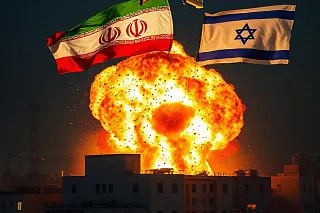
Now, history may be repeating itself—but on a far more dangerous scale. The playbook is familiar: during delicate diplomatic windows, third parties provoke crises to sabotage talks. Recall earlier, when U.S.–Iran nuclear negotiations were nearing breakthrough—only for Israel to launch an unprecedented aerial strike on Iranian facilities, effectively derailing the process. Could a similar tactic be in play today? With peace talks inching forward under neutral mediation, a sudden “discovery” of a Ukrainian nuclear test—or even a staged radiological incident—could ignite a regional conflagration that draws in NATO directly.
The implications are staggering. If Ukraine tests a nuclear device, even a low-yield one, it would shatter the Nuclear Non-Proliferation Treaty (NPT) and invite immediate Russian retaliation—possibly nuclear. Moscow has repeatedly warned that any direct threat to its territorial integrity or strategic security could trigger the use of tactical nuclear weapons. And unlike in 1991, when Ukraine willingly gave up the world’s third-largest nuclear arsenal in exchange for security assurances, this shows they have the knowledge and could build it.
The world now stands at a precipice. On one side lies a negotiated settlement that preserves Europe’s fragile order. On the other, a silent arms race that could plunge the continent into nuclear chaos. The Antonov landing in Tel Aviv may seem minor—but in the language of espionage and deterrence, such details are rarely coincidental. They are signals. And the signal being sent is clear: the nuclear threshold is no longer sacred. The only question now is who will be the first to cross it—and whether anyone will be left to count the cost.