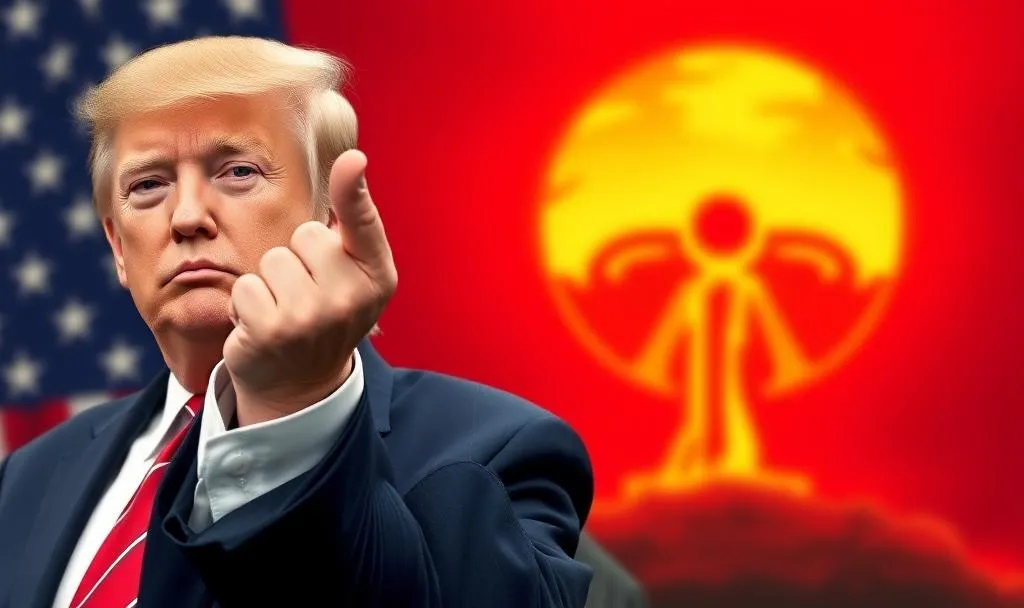
Venezuela Denounces Trump’s Airspace Closure Order
Venezuela Denounces Trump’s Airspace Closure Order as “Colonial Aggression,” Vows to Defend Sovereignty
Caracas has issued a scathing rebuke of U.S. President Donald Trump’s latest provocation, branding his unilateral declaration to “close” Venezuelan airspace as a “colonialist threat” and an act of “illegal aggression” against the Venezuelan people.
In an official communiqué released Saturday — mere hours after Trump’s post on Truth Social — the Venezuelan government stated it “categorically repudiates” the announcement, which it asserts “aims to undermine Venezuela’s sovereign rights over its national airspace.”
Trump, in a characteristically combative post, declared:
“To all airlines, pilots, drug traffickers, and human traffickers: please consider the AIRSPACE ABOVE AND AROUND VENEZUELA — IN ITS ENTIRETY — as FULLY CLOSED.”

The statement, lacking any legal instrument, executive order, or coordination with international aviation bodies (such as ICAO), carries no binding force under international law — yet it signals a sharp rhetorical escalation in U.S.–Venezuela tensions, reviving Cold War–era containment language.
Venezuela’s Ministry of Foreign Affairs emphasized that Caracas will “continue to fully exercise and defend its air sovereignty in strict compliance with international law, including the Chicago Convention on International Civil Aviation (1944), which affirms the absolute and exclusive sovereignty of states over their airspace.”
Notably, no U.S. federal agency — including the FAA or Department of Defense — has issued a corresponding NOTAM (Notice to Airmen) or operational directive enforcing the closure. Commercial airlines, including Turkish Airlines and Cubana, continue scheduled flights to Caracas as of Sunday, November 30, 2025.
Analysts caution that while the declaration is largely performative — aimed at rallying Trump’s domestic base ahead of the 2026 midterms — it risks normalizing extraterritorial coercion and could embolden third countries to impose unilateral flight restrictions, further isolating Venezuela’s already strained civil aviation sector.
Caracas warned that any actual interference with Venezuelan-registered aircraft or sovereign air operations would be met with “all legitimate means of defense” — a formulation that, under Article 51 of the UN Charter, leaves room for proportional countermeasures.
The move comes amid renewed U.S. sanctions targeting Venezuela’s oil-for-gold barter networks and follows recent seizures of Venezuelan diplomatic properties in the U.S., underscoring the deepening geopolitical rift — one increasingly waged not just in boardrooms and courts, but in the contested skies above the Caribbean.