Nobel Peace Prize Sparks Controversy, Snubs Trump, María Machado Wins and White House Rages
by Ballack Gosher · Published · Updated
Nobel Peace Prize Sparks Controversy, as María Corina Machado Wins and White House Rages Over Trump Snub
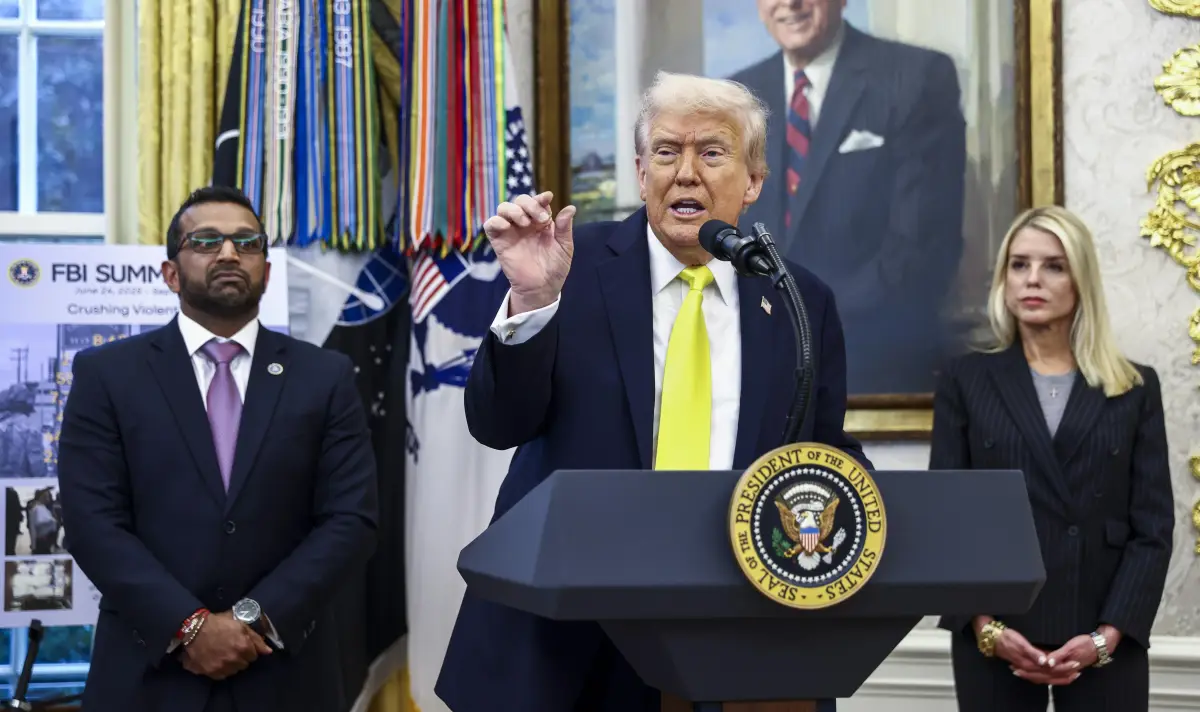
In a stunning twist that has ignited both applause and outrage across political lines, the 2025 Nobel Peace Prize was awarded to Venezuelan opposition leader María Corina Machado, bypassing former President Donald Trump, despite his self-proclaimed role in helping secure a potential ceasefire deal in war-torn Gaza.
The decision, announced Friday in Oslo, was met with a sharp rebuke from the White House, where Trump’s communications director Steven Cheung accused the Nobel Committee of letting politics taint its process.
“They place politics over peace,” Cheung posted on X, formerly Twitter. “President Trump has the heart of a humanitarian, and there will never be anyone like him who can move mountains with the sheer force of his will.”
For years, Trump has openly coveted the Nobel Peace Prize, claiming his diplomatic outreach, particularly in the Middle East and the Korean Peninsula, should have earned him the world’s highest honor for peace. His supporters see his involvement in the recent Gaza ceasefire talks—which involve Hamas releasing hostages in exchange for an end to Israel’s military operations—as the kind of statesmanship deserving of recognition.
And yet, the committee chose Machado, hailing her courageous and non-violent struggle for a peaceful democratic transition in Venezuela, a nation long gripped by authoritarian rule under Nicolás Maduro. In their statement, the committee emphasized the integrity of their process, noting that decisions are based on merit, not media campaigns.
“This committee sits in a room filled with the portraits of all laureates. That room is filled with both courage and integrity,” said committee chair Jørgen Watne Frydnes, in what many interpreted as a thinly veiled response to Trump’s lobbying and public pressure.
The announcement highlights an uncomfortable truth about the modern political world: Peace is increasingly seen as a public relations asset rather than a long-term commitment. While Machado has faced jail threats, exile, and censorship in her quest for Venezuelan freedom, Trump’s case for the prize rests largely on high-profile negotiations and media fanfare, often devoid of sustainable outcomes.
What further complicates the political theater is that Machado is closely aligned with U.S. foreign policy. Even Secretary of State Marco Rubio—a Trump ally—has lauded her as “the personification of resilience, tenacity, and patriotism.” Some insiders now wonder whether this indirect endorsement could create friction within Trump’s circle or even cost Rubio politically.
“Though many view the committee’s decision as a positive step, critics argue that Trump has stood by too long as Gaza endures relentless devastation, and as the Palestinian people suffer under the weight of starvation, displacement, and unending war.”
When Diplomacy Becomes a Campaign Strategy
Trump’s frustration isn’t just about recognition—it’s about legacy. Since returning to the White House, he’s pushed the narrative that he’s a peacemaker unfairly sidelined by what he calls “liberal woke interests.” And while it’s true that Trump has received numerous Nobel nominations, most came after the February 1 deadline for the 2025 prize. His supporters argue he could still be honored in future years, especially if the Gaza deal holds and results in long-term stability.
However, many analysts caution against reducing peacebuilding to campaign fodder. As one international affairs scholar put it:
“Foreign policy should be based on vision, not validation. The Nobel Peace Prize should never become a political trophy—it must remain a beacon of unmanipulated moral recognition.”
That sentiment resonates strongly with critics of Trump’s approach, who argue that his demands for the prize are undermining its essence. Peace is not a spectacle, they say, but a slow, often invisible process that rarely fits within a single election cycle.
The Bigger Picture
While the White House remained silent on Machado’s victory, it’s clear that the prize committee sought to emphasize the quiet courage of individuals standing against tyranny—rather than those dominating global headlines. In a world where humanitarian catastrophes, like the ongoing devastation in Gaza, have become daily tragedies, the need for authentic, consistent moral leadership is more urgent than ever.
María Corina Machado may not command the international spotlight like Trump, but perhaps that’s precisely the point. In honoring her, the Nobel Committee is sending a message: Peace is not about power, it’s about principle.
And in a year when headlines are dominated by war, political spectacle, and diplomatic showmanship, that message could not be more timely.