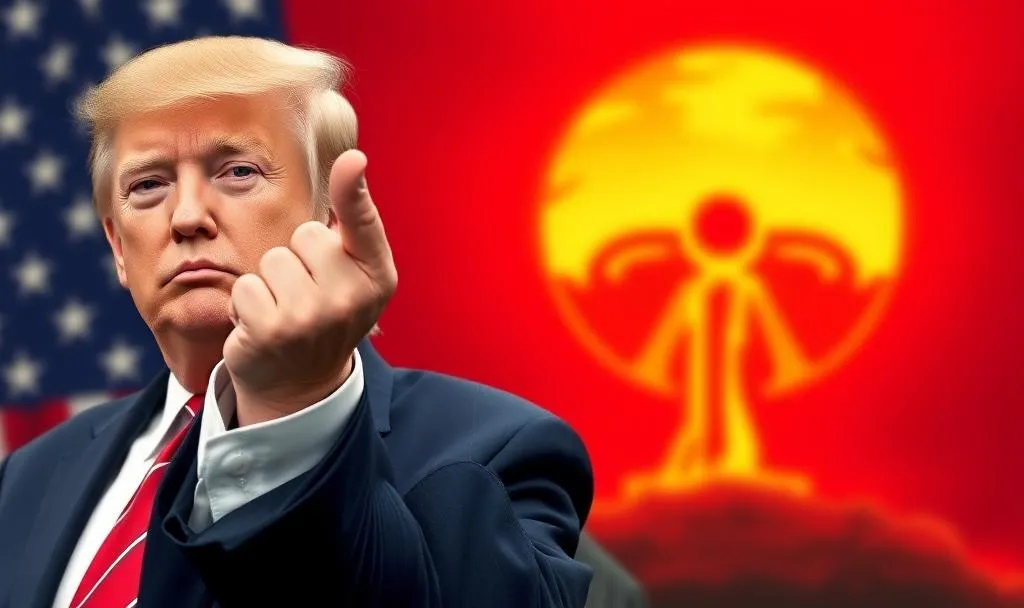
“We’ve Got Two Weeks!” Congress Races Against Clock as Shutdown Looms; Real Reason Behind Trump’s UK Visit
The clock is ticking. With just 14 days until the federal government risks grinding to a partial halt.
We’ve Got Two Weeks!” Congress Races Against Clock as Shutdown Looms; Real Reason Behind Trump’s UK Visit Sparks Global Speculation
WASHINGTON / LONDON The clock is ticking. With just 14 days until the federal government risks grinding to a partial halt, U.S. lawmakers are scrambling to pass a stopgap funding bill but partisan trenches are deepening, and compromise feels increasingly like a fantasy.
Late Wednesday, the Republican-controlled House of Representatives narrowly passed 216 to 210 a procedural vote to begin debating a Continuing Resolution (CR) that would fund federal agencies through November 21. This temporary lifeline is meant to buy time for Congress to finalize the full fiscal 2026 budget, which officially kicks off October 1. But with Senate Democrats digging in their heels and the White House throwing its weight behind the GOP plan, the path forward is anything but smooth.
The CR isn’t just about keeping lights on in federal buildings. Tucked inside is an $88 million emergency appropriation to bolster security for members of Congress, Supreme Court justices, and top executive branch officials, a direct response to the chilling assassination of a prominent conservative figure earlier this year. Republicans aim to pass the bill by Friday and send it to the Senate, where it faces a steeper climb: needing 60 votes in a chamber where they hold only 53 seats.
Enter the White House. In an unusual move, President Donald Trump’s administration issued a formal “Statement of Administration Policy” endorsing the Republican CR, a move Democrats swiftly dismissed as partisan theater.
“This isn’t governing, it’s grandstanding,” said one senior House Democrat, who asked not to be named. “They’re using a funding bill to push their agenda while ignoring the needs of working families.”
Not to be outdone, Democrats unveiled their own counter-proposal late Wednesday: a CR that would keep the government open until October 31, and pack in major healthcare wins. Their version would reinstate Medicaid funding stripped from Trump’s earlier tax overhaul and make permanent key Affordable Care Act tax credits aimed at lowering premiums for middle- and lower-income Americans.
Senate Minority Leader Chuck Schumer (D-NY) called it a “serious offer for serious times.” Speaking to reporters outside the Capitol, Schumer didn’t mince words: “We’ve got two weeks. They need to sit down and talk to us, maybe we can get a good deal. Let’s see.” He contrasted the GOP’s “same old status quo, rising costs, falling care” with the Democratic vision: “We want to meet people where they are improving health care, reducing costs, putting people over politics.”
Republicans weren’t impressed. A senior Senate GOP aide dismissed the Democratic bill as “a frivolous wishlist designed to fail.” And with good reason: in a 53-47 Senate, Republicans still need seven Democratic votes to break a filibuster. That math doesn’t add up yet.
MEANWHILE, ACROSS THE ATLANTIC, TRUMP’S “ETERNAL” UK VISIT RAISES EYEBROWS
While Washington burns with budget brinksmanship, President Trump is basking in royal splendor across the pond and some analysts say there’s far more at stake than photo ops and polite toasts.
At a glittering state banquet hosted by King Charles III at Windsor Castle, attended by tech titans, PM Keir Starmer, and the Prince and Princess of Wales, Trump declared the U.S.-UK alliance “eternal,” comparing the two nations to “two notes in one chord, two stanzas of the same verse.” He called it an “extraordinary privilege” to be the first U.S. president invited for two state visits, lavishing praise on the monarchy and reaffirming “unbreakable” ties on trade, defense, and global security.
But beneath the velvet and crystal, whispers swirl.
Insiders suggest Trump’s visit coming at a time of seismic global realignment may carry a more urgent, unspoken agenda:
To rally the “Five Eyes” intelligence alliance (U.S., UK, Canada, Australia, New Zealand) and broader Western partners into a coordinated front against the rising influence of SCO, BRICS (Brazil, Russia, India, China, South Africa) and the Euro-Asian economic bloc.
“The post-WWII Western order is gasping for air,” said Dr. Elena Petrova, geopolitical strategist at the Eurasia Institute.
“Trump’s royal tour isn’t just diplomacy, it’s a signal. The old guard won’t go quietly. They’ll disrupt, divide, and destabilize before they let the reins of global multi-polar power be.”
Protests in London and Windsor, organized by the “Stop Trump” coalition underscored deep public unease.
Demonstrators carried signs reading “Fascism Has No Crown” and “BRICS Not Bombs,” reflecting a growing global sentiment that the West’s unilateral dominance is ending and that Trump’s brand of muscular nationalism is a last, desperate grasp at control.
Today, Trump and First Lady Melania will be guests of PM Starmer at Chequers, where talks are expected to focus on a staggering £150 billion in potential U.S. investment, a figure that, if realized, could reshape the UK’s post-Brexit economy. But behind closed doors, sources say, the real conversation will be about alignment: military, technological, and ideological, against what Trump and his allies increasingly frame as the “authoritarian axis” of BRICS and its partners.
THE BIGGER PICTURE: A WORLD IN FLUX
Back in Washington, the budget fight is more than fiscal policy, it’s a microcosm of a nation, and a world, at a crossroads. Republicans cling to austerity and security-first spending. Democrats push social investment and healthcare expansion. And the White House? It’s playing global chess while Congress fiddles with stopgap bills.
With $7 trillion in federal spending on the line and mandatory programs like Social Security and Medicare untouched by this debate the temporary CR covers just a quarter of the budget. But its symbolism is massive. It’s about priorities. Power. And who gets to define America’s future and by extension, the world’s.
As Schumer said: “We’ve got two weeks.” But the world? It’s not waiting.