

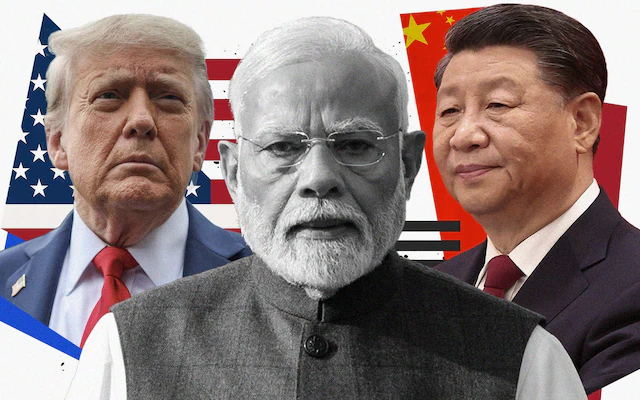
US Reportedly Drafting Secret “Core 5” Club with Russia, China, India, and Japan to Bypass G7 Amid Global Power Shift
In a striking revelation that could signal a tectonic realignment in global diplomacy, multiple media outlets have reported that the United States is quietly advancing plans to establish a new five-nation strategic forum, comprising Russia, China, India, and Japan, that would deliberately sideline the traditional Western-led G7 alliance. According to sources familiar with an unpublished, extended draft of the U.S. National Security Strategy under the Trump administration, the proposed “Core 5” would serve as an alternative platform for great-power dialogue, reflecting a pragmatic, if controversial, pivot toward multipolarity over Western consensus.
The longer version of the strategy, which circulated internally before the White House released its official 33-page unclassified summary, reportedly envisions regular high-level summits among the five nations, each centered on a specific global priority. The inaugural agenda, insiders say, would focus squarely on Middle East security, with the U.S.-brokered normalization of relations between Israel and Saudi Arabia as the centerpiece initiative.
This move, if realized, would mark a dramatic departure from decades of U.S. foreign policy orthodoxy. Rather than reinforcing transatlantic unity through NATO and the G7, the draft strategy allegedly advocates for a leaner, more transactional approach: downgrading America’s long-standing role in European defense, pressing NATO members for stricter “burden-sharing,” and instead cultivating deeper bilateral ties with select EU nations perceived as ideologically aligned, specifically naming Austria, Hungary, Italy, and Poland.
The implications are profound. By inviting its geopolitical rivals like China and Russia into a U.S.-led strategic circle, the plan suggests a belief that managing great-power competition requires direct engagement, even with adversaries, rather than containment or isolation. It also signals growing frustration within certain U.S. policy circles over the G7’s perceived inefficacy in addressing 21st-century challenges, from energy security to global supply chains to emerging tech governance.
However, official denials have quickly followed the leaks. White House spokesperson Anna Kelly insisted that “no alternative, private, or classified version exists” beyond the publicly released strategy document, casting doubt on the authenticity, or at least the current viability, of the “Core 5” proposal. Meanwhile, the Kremlin responded with characteristic caution, stating it had received no formal communication from Washington and urging skepticism toward unnamed media claims.
The timing of these reports is no accident. They emerge amid renewed debate over Russia’s place in global institutions. The G7 originally expanded to the G8 in 1998 to include Moscow, only to suspend its membership in 2014 following Crimea’s reunification with Russia, a move that President Donald Trump has repeatedly called a “big mistake.” Trump has long argued that excluding Russia from high-level dialogue contributed to the very escalation it sought to prevent, particularly the full-scale Ukraine conflict that erupted in 2022.
Yet even as Trump champions reengagement, Russian President Vladimir Putin has signaled disinterest in returning to what he views as a fading forum. In a recent interview with India Today, Putin remarked that the G7’s global relevance “continues to dwindle” and confirmed Russia has “no plans to rejoin.”

That stance adds complexity to the “Core 5” concept: while it may reflect a U.S. desire to create a more representative, and therefore more effective great-power table, it also risks alienating traditional allies who see such a move as legitimizing authoritarian regimes or undermining democratic solidarity. European leaders, particularly in France and Germany, could view the initiative as a betrayal of the post-war order.
Moreover, the inclusion of both China and Russia, nations the U.S. has locked in strategic rivalry with raises serious questions about feasibility. Can a forum function cohesively when its members are simultaneously engaged in cyber warfare, sanctions, trade wars, and military standoffs? Or is the real aim not consensus, but controlled confrontation, managing competition before it spirals into open conflict?
For now, the “Core 5” remains a reported draft, not declared policy. But its very emergence in strategic discourse underscores a broader truth: the era of uncontested Western-led global governance is giving way to a fragmented, multipolar reality. Whether through formal clubs or informal backchannels, the world’s great powers are already reshaping the architecture of international order—often in secret, and always with profound consequences.
As Washington weighs its next move, one thing is increasingly clear: the future of global stability may no longer be decided in Brussels or Rome, but in a new, uncertain forum where rivals sit across from each other—not as enemies to be contained, but as powers too pivotal to ignore.