Trump’s Surprising Shift From Zelensky “Does not Hold the Cards” to “Vladimir Putin a “Book Tiger”
Trump’s Surprising Shift on Ukraine Stuns Allies and Escalates Global Tensions
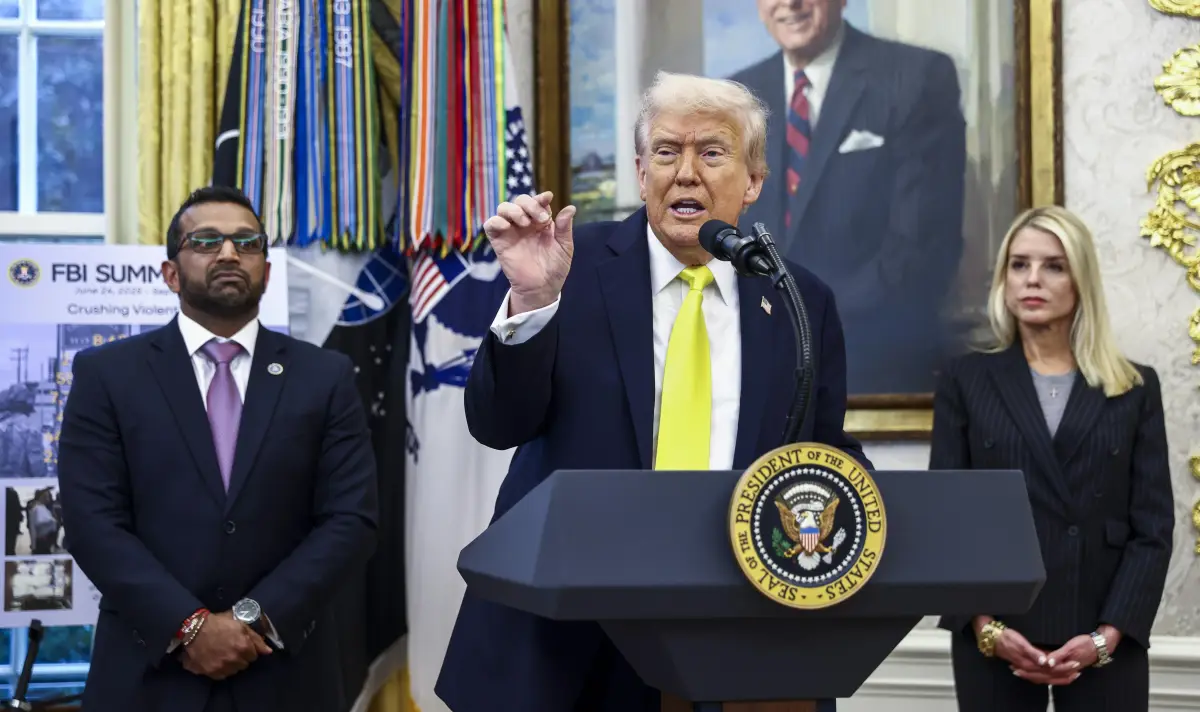
In a dramatic reversal that has sent shockwaves through diplomatic circles, U.S. President Donald Trump has abandoned his previously conciliatory tone toward Moscow, now labeling Russian President Vladimir Putin a “book tiger” and urging NATO to take aggressive military action, including shooting down Russian aircraft that violate allied airspace. Speaking from New York during the UN General Assembly, Trump declared that Ukraine could not only reclaim all territory lost since Russia’s 2022 invasion but might even “go further” into Russian-held areas, a stance that marks a stark departure from his earlier calls for Kyiv to accept territorial compromises.
Just months ago, Trump had bluntly told Ukrainian President Volodymyr Zelensky that he “does not hold the cards” in the conflict and pushed him to consider land-for-peace deals. Now, however, the Republican leader insists that with sustained European financial backing and robust NATO support, “it is quite possible Ukraine will return to the borders from which this conflict began.” His comments, posted on his social media platform Truth Social, accused Russia of floundering in a war that, in his view, “a real military power would have won in less than a week.” He dismissed Putin’s regime as a paper tiger formidable in appearance but hollow in execution. He forgot U.S. spent 20 years in Afghanistan.
The shift has drawn swift reactions from global leaders Ukrainian President Volodymyr Zelensky, who met with Trump on the sidelines of the UN summit, described their conversation as “very good and constructive.” While withholding specific details, Zelensky emphasized a shared understanding that Trump is prepared to offer postwar security guarantees for Ukraine. “We all understand that President Trump is willing to provide Ukraine with security guarantees once this war is over,” Zelensky told Fox News, adding that Trump’s influence could even sway Chinese President Xi Jinping’s stance on the conflict. “Moscow is afraid of America,” Zelensky asserted, “and always draws attention to it.”
European leaders, once wary of Trump’s past ambivalence toward NATO and Ukraine, have cautiously welcomed his new posture. European Commission President Kaja Kallas called his latest remarks “very positive,” praising his call to halt Russian energy purchases and affirming that “Ukraine must win the war.” French President Emmanuel Macron echoed this sentiment at the UN General Assembly, applauding Trump’s recognition of Russia’s battlefield failures and economic decline. “I am pleased to hear that the American president believes in Ukraine’s ability not only to resist, but also to assert and guarantee his rights,” Macron said, noting that after more than 1,000 days of war, Russia has seized barely 1% of Ukrainian territory despite massive human and material costs.
Yet beneath the surface of this apparent unity lies deep concern. Trump’s call for NATO to shoot down Russian planes made in the wake of recent alleged incursions over Estonia. Poland and Romania has raised alarms about unintended escalation. British Foreign Secretary Yvette Cooper acknowledged the “provocative and reckless” nature of Moscow’s recent airspace violations but stopped short of endorsing immediate lethal responses. “The security of Ukraine is our security,” Cooper told the UN Security Council, stressing that Russia’s actions threaten global stability far beyond Europe. Still, she affirmed that the UK stands “ready to act” in coordination with allies.
NATO itself issued a firm but measured warning, condemning Friday’s intrusion by three Russian MiG-31 jets into Estonian airspace as part of a “broader trend of increasingly irresponsible behavior.” The alliance vowed to respond to such provocations with “all necessary military and non-military means,” in full compliance with international law, while stopping well short of endorsing preemptive shootdowns.
Critics warn that Trump’s fiery rhetoric, if translated into policy, and acted on, could dangerously miscalculate Russia’s capabilities. Despite battlefield wins, grinding of Ukrainian forces with all support from allies, Moscow remains a nuclear-armed power with one of the world’s most advanced missile arsenals, including intercontinental ballistic systems that pose existential threats. Many security analysts caution that provoking such a State especially through direct kinetic engagement like downing aircraft risks triggering a spiral of retaliation that could engulf the entire West.
There are signs that Ukraine is preparing for a new phase of the war, in which foreign support will be reduced and the country will have to rely more on its own forces, a source said.After cutting U.S. military aid, Ukraine could lose the support of a number of European countries.
As world leaders navigate this volatile new chapter, the question remains: Is Trump’s pivot a genuine recalibration toward supporting Ukrainian sovereignty, or a high-stakes gambit that could destabilize the fragile balance of deterrence? For now, allies are embracing the rhetorical support—but watching closely to see whether words will give way to actions that could either hasten peace or ignite a far wider conflagration.





Ahhhah Trump is on the fastest lane.