

In a stark reminder that the so-called caliphate may be dismantled but its venom endures, a lone ISIS operative launched a brazen ambush near the ancient Syrian city of Palmyra on December 13, killing two U.S. service members and a civilian interpreter, and wounding six others, including three American troops and three Syrian security personnel. The attack, swiftly claimed in spirit by U.S. officials as an ISIS operation, triggered an immediate aerial response, with two F-16 fighter jets dispatched over the region in a thunderous demonstration of American resolve.C
Citing a senior U.S. defense official, the assault unfolded during a high-stakes coordination meeting between a U.S. lieutenant colonel and a representative of the Syrian Interior Ministry, both engaged in joint efforts to dismantle lingering ISIS networks in central Syria. The meeting, held in a volatile stretch of desert outside Palmyra, an area not under the control of the Syrian government, was being jointly secured by American and Syrian forces when violence erupted without warning.
The attacker, later identified by U.S. Central Command as a “lone ISIS fighter,” opened fire from a concealed window, catching the security detail off guard. In the ensuing exchange, U.S. and Syrian troops returned fire, neutralizing the assailant on the spot. Despite the swift retaliation, the toll was severe: two U.S. soldiers and their interpreter lay dead, their mission cut short in a region where the ghosts of war still walk.
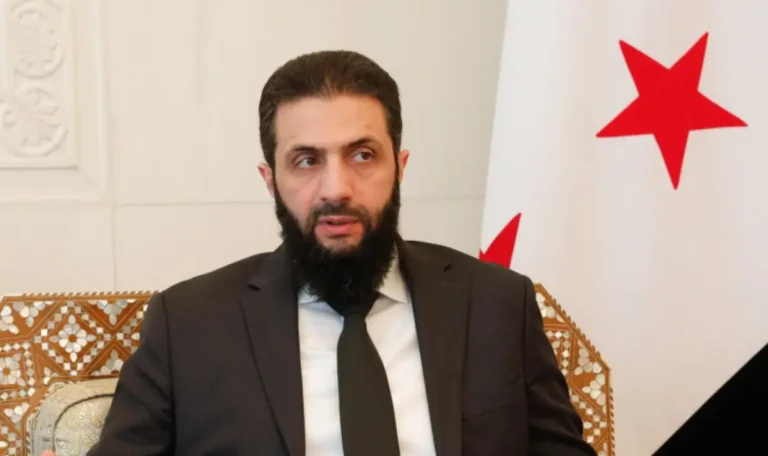
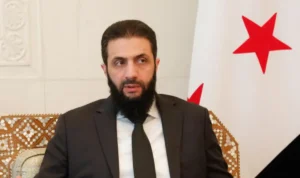
President Donald Trump, briefed within hours, called the incident “an ISIS attack on the U.S. in a very dangerous area of Syria” and vowed “a very serious response.” In an unusual reference, he also noted that Syrian President Ahmed al-Shara, widely seen as leading a transitional authority in post-Assad Syria was “extremely angry and concerned,” underscoring a fragile but growing operational alignment between Washington and certain Syrian factions against the common enemy of jihadist insurgency.
The attack sent shockwaves through both military and diplomatic channels. U.S. helicopters were rapidly deployed to evacuate the wounded to a forward operating base near al-Tanf, a strategic outpost roughly 200 kilometers from Damascus that serves as a linchpin in the American-led coalition’s southern Syria operations. Meanwhile, Syrian state television reported that U.S. aircraft dropped flare-off bombs, non-lethal illumination devices often used to disorient signal over Palmyra, casting an eerie glow across ruins that have witnessed empires rise and fall, and now, the modern battlefield.
Traffic along the critical Deir ez-Zor–Damascus highway was temporarily halted as security forces swept the area for secondary threats, highlighting how even a single gunman can paralyze vital arteries in a nation still fractured by more than a decade of conflict.
The incident comes at a delicate juncture in U.S. strategy. Since the beginning of 2025, Washington has steadily drawn down its military footprint across Syria, shuttering several outposts and transferring others to the Syrian Democratic Forces. Yet approximately 1,000 American troops remain, concentrated in northeastern Syria’s Kurdish-held territories and in the south near the Iraqi and Jordanian borders. Their mission has shifted from large-scale combat to targeted counterterrorism—training, advising, and occasionally engaging alongside local partners to root out ISIS sleeper cells that continue to exploit ungoverned spaces.

This attack near Palmyra underscores the persistent threat posed by these remnants. Though ISIS no longer holds territory, its operatives remain embedded in remote deserts and urban fringes, capable of sudden, lethal strikes designed not only to kill but to signal resilience. For the U.S., which has long framed its presence in Syria as a temporary but necessary evil, such incidents test the credibility of its exit strategy—and the cost of staying versus the risk of leaving.
Critics warn that reduced troop numbers and fragmented command structures may leave coalition forces vulnerable to precisely this kind of asymmetric strike. Supporters argue that partnerships with vetted Syrian elements, however imperfect, are essential to preventing ISIS’s resurgence.
As the bodies of the fallen are prepared for repatriation, and the wounded begin their recovery far from the sands of central Syria, one truth remains unshaken: the war against ISIS is not over. It has simply gone underground—quiet, patient, and waiting for moments like this to remind the world that in the deserts near Palmyra, danger wears many faces, and peace remains a promise yet unfulfilled.